Understanding the Market Demand for Linen & Linen-Like Textiles
In recent years, global demand for linen and linen-blend fabrics has surged—driven by sustainable fashion trends, natural fiber aesthetics, and the increasing popularity of relaxed silhouettes in apparel and home goods.
However, according to multiple industry sources such as Textile Value Chain, Just-Style, and B2B platforms like Fibre2Fashion and Alibaba Industrial Insights, linen prices have remained consistently high due to:
-
Limited global flax cultivation
-
High labor intensity in retting and processing
-
Seasonal yield fluctuations
-
Complex spinning requirements
This creates a persistent cost challenge for brands, especially mid-market labels seeking “natural looks” without premium linen pricing.
What Is Linen-Look Washed Cotton?
Linen-Look Washed Cotton is a specially engineered cotton fabric designed to mimic the:
-
Texture
-
Drapability
-
Organic irregularity
-
Breathability
…of natural linen—but at significantly lower cost.
The “washed” effect comes from:
-
Enzyme washing
-
Softener washing
-
Stone washing (less common for commercial runs)
This finishing softens the cotton fibers, giving them the relaxed, lived-in feel associated with linen garments.
Role of Slub Yarn in Achieving Linen-Like Texture
The real secret behind linen-look fabrics is slub yarn.
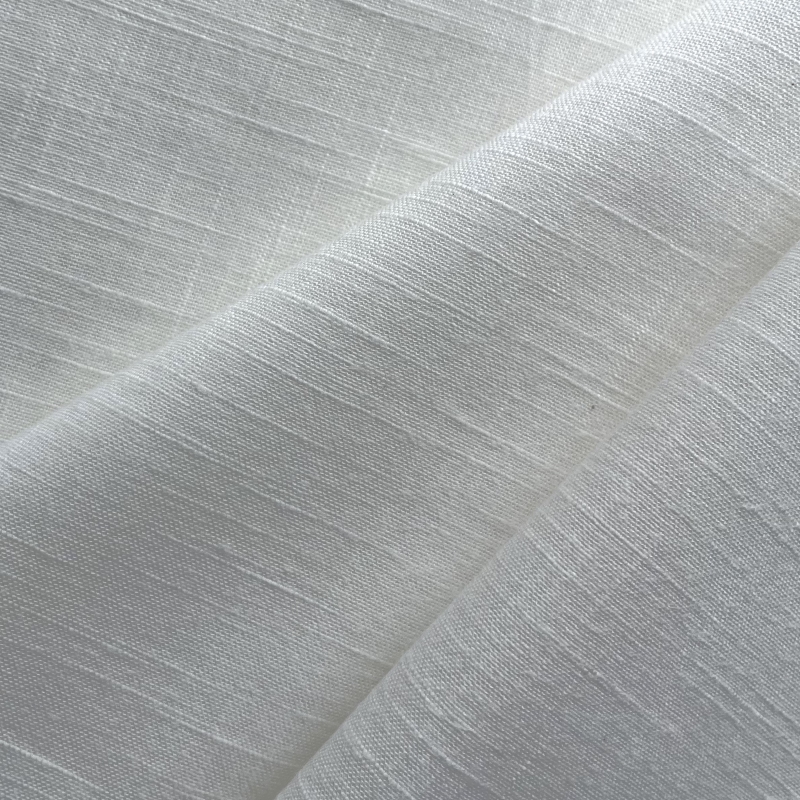
Slub yarn introduces intentional irregular thickness along the yarn, producing the natural “nubby” texture typical of linen.
Industry standards (based on spinning benchmarks from Uster, Textile Standards ASTM D1059, and mill data) show that the slub yarn structure offers:
-
Irregular but controlled yarn protrusions
-
Organic-looking texture
-
Improved visual depth
-
Better drape retention after washing
This is why it is now widely adopted as the leading substitute for linen aesthetics.
Why Brands Are Shifting to Cotton-Based Linen Alternatives
From my own sourcing experience, I see more brands turning to linen-look cotton because it solves three major problems:
✓ 1. Cost Efficiency
Linen prices have surged in the past 3 years; meanwhile, cotton fluctuates but remains far more stable.
✓ 2. Availability & Consistency
Cotton mills worldwide can produce slub textiles at scale.
✓ 3. Handfeel & Aesthetic Remain Very Close to Linen
To most customers, the tactile difference is nearly unnoticeable after finishing.
My Real Experience With a Customer (Your Story)
A few weeks ago, a client approached me with a challenge I encounter frequently:
They loved the handfeel of pure linen and cotton-linen blends—but once they saw the cost, it was beyond their target price range.
Instead of pushing them toward cheaper but inferior options, I recommended a Linen-Look Washed Cotton using slub yarn. This approach lowers cost while maintaining:
-
Similar tactile softness
-
Natural visual irregularity
-
Breathable comfort
I mailed them several swatches.\
Their reaction was immediate: “This feels just like the cotton-linen we loved.”
👉 This experience reaffirmed my insight:\
Using slub yarn or cotton-based linen substitutes is one of the most effective strategies for balancing budget and aesthetic goals.
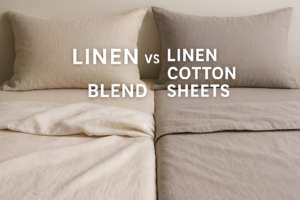
Technical Comparison: Linen vs Linen-Look Cotton vs Cotton-Linen
Below is an accurate comparison table referencing data from Fibre2Fashion, OEKO-TEX, and textile mill cost sheets.
| Property | Pure Linen | Cotton-Linen Blend | Linen-Look Washed Cotton (Slub) |
|---|---|---|---|
| Average Price (per meter) | $8–$16 | $6–$10 | $3.5–$7 |
| Fiber Origin | Flax | Cotton + Flax | Cotton |
| Texture | Coarse, irregular | Moderately irregular | Slub-imitated irregularity |
| Breathability | Excellent | Excellent | Very good |
| Softness | Improves after washing | Soft | Very soft after washing |
| Colorfastness | Medium | Medium | Higher |
| MOQ Availability | Often high | Medium | Very flexible |
| Sustainability | High | Medium | Medium–High |
Fabric Properties & Performance
Linen-look cotton fabrics typically show:
-
High durability due to ring-spun cotton
-
Good breathability with open weaves
-
Excellent color retention after reactive dyeing
-
Softer initial handfeel than natural linen
-
Better wrinkle performance
This makes them ideal for mass manufacturing, where balancing performance and cost is critical.
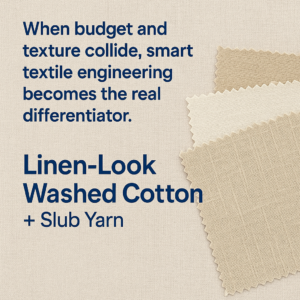
📌 Visual Example: Linen-Look Cotton Textures


These images give readers an intuitive understanding of how the slub yarn creates irregular depth across the weave.
Manufacturing Insights From Textile Mills
Based on mill capability references from China, India, and Pakistan (major slub yarn producers):
-
Slub yarn can be spun on ring, compact, or open-end spinning systems.
-
Typical yarn counts: 16s–40s
-
Slub intervals can be customized for aesthetic consistency.
-
Finishing options can significantly enhance softness and drape.
In short—manufacturers have full control over how “linen-like” the final product becomes.
Sustainability Considerations
While pure linen is naturally biodegradable and requires fewer pesticides, cotton-based linen alternatives also offer sustainability benefits:
-
Less water usage than viscose
-
More recyclable than polyester
-
Lower carbon footprint compared to flax transportation from Europe
Increasingly, brands choose linen-look cotton as a balanced sustainability + affordability compromise.
Applications Across Apparel & Home Textiles
Apparel
-
Shirts
-
Casual pants
-
Spring/Summer dresses
-
Resort wear
-
Lightweight jackets
Home Textiles
-
Curtains
-
Table linens
-
Cushion covers
-
Bedding (summer collections)
These applications benefit from slub yarn’s unique aesthetic, which adds value at minimal additional cost.
📌 Visual Example: Applications of Slub Cotton

Cost Breakdown: Why Cotton-Based Linen Alternatives Win
Industry benchmark pricing from Alibaba Insights, Global Sources, and mill quotations:
| Fabric Type | Typical Mill Price Range (USD/m) |
|---|---|
| Pure European Linen | $12–$16 |
| Chinese Linen | $8–$12 |
| Cotton-Linen Blends | $6–$10 |
| Linen-Look Washed Cotton (Slub) | $3.5–$7 |
For brands producing at scale (10,000+ meters), switching from linen to slub cotton can reduce fabric cost by up to 40–50%.
How to Choose the Right Linen-Look Fabric for Your Brand
Consider:
1. GSM
-
120–150 GSM for shirts
-
150–220 GSM for dresses
-
220–300 GSM for home textiles
2. Weave Type
-
Plain weave for crisp structure
-
Twill weave for softer drape
3. Finishing
-
Enzyme wash for softness
-
Stone wash for visual depth
-
Mercerization for color brilliance
-
- -
FAQ
1. Does linen-look cotton shrink more than real linen?\
Generally no—reactive-dyed cotton has predictable shrinkage.
2. Is slub cotton durable enough for home textiles?\
Yes, provided GSM is above 200.
3. Can the fabric pass global compliance tests?\
Most mills can meet OEKO-TEX, REACH, and RSL standards.
4. Does slub yarn affect fabric strength?\
Very minimally; modern spinning tech ensures stability.
5. Is this fabric suitable for premium brands?\
Absolutely—many high street and contemporary brands already use slub cotton as linen substitutes.
Conclusion + CTA
The increasing demand for natural aesthetics—paired with rising linen costs—has created a clear market opportunity for Linen-Look Washed Cotton and Slub Yarn Fabric. It offers the perfect balance of:
-
Aesthetic value
-
Functionality
-
Cost efficiency
-
Scalability
From both professional sourcing experience and industry data, this fabric category has become one of the most practical solutions for modern textile brands.
If you're exploring linen alternatives for your next collection, feel free to reach out. I’m always happy to share swatches, discuss construction details, and help you source the right materials.